Re: Gag Order in Sunshine State
An article in the Nov. 13 issue of Inside Higher Ed reports on an unfolding conflict at the 11,000-student Pensacola State College, where college President Ed Meadows has determined that the student newspaper cannot allow faculty members to speak with student journalists about contract negotiations,which are currently at an impasse. The faculty union, in turn, claims the college administration is harassing union members. Administration claims its only using a section of state code. However, IHE reports that code has been ruled unconstitutional by both a federal and a state court.
Meadows' rationale is that he worries that students will be "distracted" by the controversy.
Don't students deserve to know more -- not less -- about their colleges? Why would more information be construed as "distracting" if we are teaching a generation to ask questions about the world around them?
Faculty are weighing in on the controversy. My .02, posted to IHE comments:
"The most controversial topic to appear in our campus newspaper is a
casual man-on-the-street report covering how many students in line in
the cafeteria prefer decaf as opposed to regular coffee. Sometimes there
might be the reworking of a student assignment on some aspect of
international events. This can only be expected on a campus where the VP
has to approve notices that appear on the few hallway bulletin boards
that have survived our multi-million-dollar building remodel. We have
10,000 students per day in our hallways, and yet there is only one copy
of the local paper, the "Denver Post," and one copy of the "New York
Times" on our campus, and both stay inside the library. We have no
newspaper boxes, because newspaper boxes aren't allowed on our campus
(only the free zines nobody reads anyway). We have no novels or
periodicals in our campus bookstore. They aren't allowed. Working
professionals have no way of modeling the purchasing of newspapers or
the reading of them in a community setting. Furthermore, we are barred
from using campus e-mail and faculty mailboxes from communicating with
our peers about our AAUP chapter or about our legislative efforts to
change the poverty-level wages administration pays the adjuncts (half of
our employees) who teach 85% of the courses our college offers. Neither
the Fourth Estate nor the First Amendment have much importance on our
campus. Administration's control of the student newspaper insidiously
teaches young students that is the way it's supposed to be."

In the wake of the tsunami of change, we will use this blog to call out and respond to new issues that concern instructors.
If you reached this page independently and have not seen our website, please visit us at https://sites.google.com/site/coloradoadjunctswiki/
Thursday, October 30, 2014
The Faculty Bill of Rights
October 30, 2014:
One faculty.
Unification, not adjunctification.
This week, the Colorado Conference of the AAUP published the Faculty Bill of Rights for the Colorado Community College System.
Faculty Bill of Rights
Colorado Community College System
Proposal by the American Association of
University Professors
Colorado Conference
The American Association of University Professors (AAUP) has set the standards for the profession of teaching in institutions of higher education since 1915. The mission of the American Association of University Professors is to advance academic freedom and shared governance; to define fundamental professional values and standards for higher education; to promote the economic security of faculty, academic professionals, graduate students, post‐doctoral fellows, and all those engaged in teaching and research in higher education; to help the higher education community organize to make our goals a reality; and to ensure higher education's contribution to the common good.
In consultation with numerous instructors and faculty in the Colorado Community College System (CCCS), the Colorado Conference of the AAUP has noted two major areas in which professional standards and values are not being upheld: the two-tiered faculty, in which one tier is compensated in pay and benefits far more than the other tier for approximately the same work; and a faculty government that is not transparent and does not represent the majority of those who teach for the CCCS. These deficiencies impose working conditions on the majority of the faculty that inhibit them from delivering the highest quality instruction to Colorado’s community college students. The Colorado Conference of the AAUP, therefore, recommends the following practices with regard to the faculty of the Colorado Community College System.
Faculty
1. Consider everyone with teaching responsibilities a member of the faculty, with all the rights and responsibilities of faculty.
Salary and Benefits
2. Have only one salary schedule for all faculty. Determine placement on the schedule according to the faculty member’s education, experience, and professional credentials.
3. Pay teaching and non-teaching duties at the same rate. Non-teaching duties include service, administrative, scholarly, or research obligations.
4. Administer benefits proportionally, according to each faculty member’s percentage of a full-time workload, to all members of the faculty, in accordance with state and federal laws.
Class Assignments
5. When class assignments are available, permit each faculty member to teach up to a full-time workload per semester.
6. If the faculty chooses, supplant the seniority system for assigning classes with a faculty-developed and faculty-approved merit system, once a faculty government and department/program bylaws are in place.
7. Require no faculty member to work more than a full-time workload per semester in teaching and/or non-teaching duties per semester.
8. Allow the faculty to determine what constitutes a full-time workload.
Job Security
9. Establish in policy that a faculty member may be dismissed or his or her contract not renewed for cause or reduction in workforce.
10. Notify any faculty member in writing as to the reason or reasons for dismissal.
11. Allow each faculty member, after he or she has completed the equivalent of three years’ full-time work in teaching and/or non-teaching duties, access to a grievance process in the event of dismissal, non-reappointment, reduced workload, or retaliation.
12. Allow grievances to be decided by an objective faculty committee.
Faculty Government
13. Establish a faculty government at each college, composed of elected faculty members from each department or program, whose responsibility will be to represent the faculty’s interests.
14. Allow the faculty government to determine how its committees will be staffed and how committee work will be assigned.
15. Allow department and program committees to make decisions in hiring, class assignments, and salary increases based solely on the candidate’s or faculty member’s qualifications.
16. Acknowledge that the faculty’s decisions in personnel and curriculum supersede those of the administration, as these are the areas in which the faculty has the superior expertise.
17. Allow the faculty of each department/program to adopt (by a majority vote) a set of bylaws that will define how the department/program will be governed internally, including the procedures for selecting a chair.
18. Require department and program chairs to be responsible for representing the faculty’s interests to the administration. If the majority of the department/program faculty feels that the chair is not representing their interests, allow them to select a new chair.
Professional Development
19. Establish a procedure for equitable distribution of professional development opportunities and funds to all faculty members.
Transparency
20. Publish policies, salary schedules and costs of benefits so that they are readily accessible by the public.
21. Require that committee business be conducted in a business-like way. Publish the memberships of committees, committee meeting minutes, and committee decisions so that they are readily accessible by the faculty, excepting the proceedings and decisions with regard to personnel that legally must be kept confidential.
Academic Freedom
22. Allow faculty members the freedom to teach the truth as they see it, without administrative, public, or political pressure, within the parameters of the best practices and principles of their respective disciplines.
23. Allow faculty members the freedom to comment on matters of unit or institutional policy without fear of retaliation.
# # #

Thursday, September 25, 2014
The Adjunct Cookbook is already making a stir!
FOR IMMEDIATE RELEASE
Contact:
Caprice Lawless, President
Front
Range Community College Chapter
American
Association of University Professors
By publishing a cookbook like no other, instructors at Front
Range Community College (FRCC) are teaching peers, students, parents, and
others in the community about a situation that has reached a boiling point.
Interspersed amid dozens of what the authors call “food bank-friendly
concoctions,” the text is a primer in how the Colorado Community College System
(CCCS) is slicing, dicing and shredding collegiate-level teaching. Many pages
of research, audit charts, and budget breakdowns document what the authors say
is a recipe for catastrophe for 163,000 Colorado students enrolled in those colleges.
FRCC has campuses in Longmont, Westminster, Ft. Collins and Brighton.
Included are recipe categories such as “The Frappes of
Wrath” and “Nobucks Coffee Drinks.” Recipes
calling for beef scraps, bruised tomatoes, orange peelings and chicken bones
point to a workforce living on the edge. “Cracked Windshield” is a mint drink
based on cracked Lifesaver candies. “If Only” is a gin-and-tonic sans
gin. “Sliding-Toward-Despair Asian Sliders” are, perforce, small and
inexpensive to make.
The
recipes, say the authors in the introduction, reflect accurately the working
conditions of the college’s faculty majority. There is also much humor
sprinkled in amidst evidence of hardship and other ponderous but necessary
facts adjuncts need to know about why they are experiencing hardship.
The group
created the book when they discovered, after two years of organizing effort,
that many of the downtrodden and demoralized adjunct faculty are too weary even
to take a passing glance at hallway-table handouts and were similarly loath to
read further the research on the academic labor movement.
The cheery
cookbook, with the word "Adjunct" set in a fun style on the cover, is
not intimidating, if the initial (sold out) print run is any indication. The authors
believe that once teachers and students get the books home to read the recipes,
they discover many startling facts about their college. Most of those facts are
public information, albeit well-hidden information, about a bloated
administration consuming most of the $576 million in CCCS annual revenues.
Along
with its many photographs and insights from lawmakers, authors report, the
cookbook readers “will see the faces of good people who know about the
situation, will know who is already working hard to set things right, and will join
us in addressing the rapidly expanding fault line in higher education.” The
book also offers many local resources their AAUP chapter has found to help the
adjuncts get through the workweek [food bank locales and hours, local contacts
for food stamps, energy assistance, health-care, etc.).
“We hope
the book helps them realize they have not failed, but that the system
has failed them,” said Lawless. The group did not copyright the cookbook,
she said, because they want other adjunct groups around the country to use the
model to promote their work on their campuses. Copies are available for a
donation of $7.50 each (including shipping and handling), via the FRCC AAUP
website:
# # #
Saturday, April 12, 2014
Some legislators determine half of CCCS workforce (4,000+ faculty) are not real workers doing real work
by Caprice Lawless
House Bill 14-1154 was defeated in the House Appropriations Committee Thursday by a 9-4 vote. Nine of the committee members chose to disregard scores of personal letters describing lives on poverty-level wages, mounting debt, working while ill, etc., that had been sent to them by part-time and full-time professors from across the many colleges within the Colorado Community College System. Instead, the nine members were influenced mightily, they reported, by six full-time, highly paid lobbyists who work at the behest of the administration and/or six-figure-earning college presidents from whom, they reported, they were given the truth about the situation.
House Bill 14-1154 was defeated in the House Appropriations Committee Thursday by a 9-4 vote. Nine of the committee members chose to disregard scores of personal letters describing lives on poverty-level wages, mounting debt, working while ill, etc., that had been sent to them by part-time and full-time professors from across the many colleges within the Colorado Community College System. Instead, the nine members were influenced mightily, they reported, by six full-time, highly paid lobbyists who work at the behest of the administration and/or six-figure-earning college presidents from whom, they reported, they were given the truth about the situation.
Many of the dissenters on the committee, when
they weren't cracking jokes to one another or chatting even while Rep. Fischer
was trying to explain a fine point another committee member had posed to him,
enjoyed nearly an hour of grandstanding about how fervently they supported the
exploitation of the professoriate at work in the community colleges. Several
pointed out that teaching part-time at the community college was not, after
all, a real job and that those who teach as adjunct professors should get
out and find real jobs elsewhere. Some said that to pay the faculty majority a
living wage would destroy the community college system and that people in their
district would therefore be unable to get a college education.
Some of the nine dissenters reported that they
once worked as adjuncts, but discovered they needed to pursue, for example,
careers in architecture or law, and suggested community college faculty should
do the same. Some had attended community colleges in Colorado or had children
who had attended them. One pointed out that he taught for a while as an
adjunct, found it was too demanding, and so passed the job onto a junior
partner in his firm.
Some who supported the measure said for the record as they cast their
votes, they would be willing to champion a similar bill in the next legislative
session.
Lobbyists gathering in the foyer following the hearing were all
smiles, while leadership who had worked so hard on behalf of community college
faculty and quality teaching fought back tears.
Friday, April 11, 2014
Groundbreakers remain unbroken

Colo. Rep. Randy Fischer
Colorado's community college faculty owe a debt of gratitude to Rep. Randy Fischer (D-53) who valiantly brought forward HB 14-1154: The Colorado Community College Pay and Benefits Equity Act of 2014. He was ably assisted by bill co-sponsor, Sen. John Kefalas (D-14).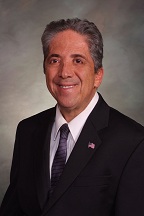
Colo. Sen. John Kefalas

Suzanne Hudson and Don Eron, Exec. Committee, Colo. Conf., AAUP
We are also in the debt of award-winning academic labor advocates Suzanne Hudson and Don Eron, of the AAUP Colo. Conf., who worked tirelessly on behalf of this measure. Tremendous help was also provided by Stephen Mumme, AAUP Colo. Conf. Co-president; Ellen Slatkin, President of AFT Colorado; Solomon Malick (AFT) and Carolyn Siegel (9 to 5 Colorado). Kudos are also in order to all members of the FRCC AAUP chapter, who, in just one year, formed a chapter and then stood on the steps of the Colorado State Capitol to help sponsors introduce this historic, groundbreaking measure.
by Don Eron
I'm sorry to report that HB14-1154, Colorado's "equal pay for equal
work" community college legislation, was defeated in the HouseAppropriations Committee this morning, 9-4. Technically, our amendmentthat demonstrated that the community college system had the resourcesto pay for HB14-1154 was defeated. At that point the bill waspostponed indefinitely, as a bit of legislative decorum.
We're proud of the fight that we waged, but, of course, aredisappointed, and feel that we let down the many Colorado adjuncts whopinned their hopes for a living wage to this campaign.
Although there were 17 bills on the Appropriations schedule, thediscussion of HB14-1154 lasted almost an hour. The Democrats who votedagainst the bill--who had received so many letters from working classadjuncts begging them to support the legislation--seemed compelled tojustify themselves. Most quoted the talking points of the communitycollege lobby, as if reciting fact. Amid the standardrationalizations--"there is a problem here but this bill is the wrongsolution that will destroy our community colleges"--my favorite waswhen one indignant legislator yelled at Rep. Randy Fischer, ourlegislative sponsor (who was brilliant today): "I wasn't influencedby the lobbyists. I talked directly to community college presidents!"
I think we had momentum after passing through the State AffairsCommittee, but the nine weeks between hearings gave the communitycollege system a chance to regroup and reload. In short, big money wontoday.
Thanks to all of you who extended your best wishes for our success inthis campaign.
Tuesday, April 8, 2014
April 8, 2014
Letter to all CCCS faculty from Suzanne Hudson, Secretary-Treasurer, Colorado Conference of the American Association of University Professors. On Saturday we posted to our site the updated HB 14-1154 Fact Sheet.
Dear Colleagues,
Letter to all CCCS faculty from Suzanne Hudson, Secretary-Treasurer, Colorado Conference of the American Association of University Professors. On Saturday we posted to our site the updated HB 14-1154 Fact Sheet.
Dear Colleagues,
This message is to update you on the Community College Pay and Benefits Equity Act (HB14-1154).
The bill will be heard by the House Appropriations Committee on Thursday, April 10. You can help with the bill’s passage by writing to the committee members listed at the end of this email.
One goal over the past several weeks has been to amend the bill to lower the cost to the general fund.
The bill’s sponsors have managed to reduce the fiscal note to require Zero general fund dollars. The CCCS can afford to pay its faculty a living wage if only it will rearrange its priorities.
A second goal has been to simplify the bill to make it fairer and easier to implement. To that end,
the bill has been amended to protect the pay, benefits, and status of regular faculty.
Some full-timers have pointed out that the seniority system required of
the bill jeopardized their own jobs and also made it possible for
faculty with seniority to
demand classes outside their fields of expertise. Point taken. So the
bill now says that preference in class assignments will be “given first to faculty who were hired on a full-time basis prior to the effective date of this section and second
to faculty on the basis of seniority which shall be determined based
on the number of course hours that a faculty member has taught
in the relevant field of study.”
Also,
many do not like the idea of a seniority system at all; they prefer a
merit system. However, currently, there is no CCCS-wide mandate that
instructors
be evaluated. Obviously, everyone who teaches should be evaluated, not
just the 15% who are regular faculty, but until an evenly administered
evaluation system is in place, a merit system can’t really be a fair
system. So now the bill says that after three
years, the seniority system for assigning teaching responsibilities “may be replaced by a faculty-developed and faculty-approved merit system for assigning teaching responsibilities.”
In
order to make the bill affordable, we’ve had to reduce the immediate
required pay for faculty in favor of a more gradual increase.
The bill now requires that all faculty be paid at least $1,015 per credit hour,
which is a significant raise from the current average of $611. However,
it’s still not on par with current regular faculty salaries, so the
bill requires an 8% salary
increase every year over the next five years. Regular faculty,
never fear – the bill requires that you continue to be paid at your
current rate and does not prohibit your receiving raises as well.
The
bill also requires that anyone who teaches at least nine credit hours
(or works the equivalent in non-teaching duties) will be eligible to be
included
on CCCS’s health insurance plan.
Full-timers, you have nothing to lose.
Your job is secure, as are your salary and benefits.
What will change is that your colleagues will also receive the job
security and compensation that befit professionals with graduate degrees
who make the community college system possible. Also, Colorado’s
community colleges will gain the reputation of excellent
places to work and will attract teachers of the highest caliber. And
students, who are, after all, the colleges’ first priority, will enjoy
the educational benefits of being taught by an experienced, dedicated
faculty who can concentrate on their teaching.
This
is a win-win situation for Coloradoans. The Colorado Community College
System will not have to close campuses, discontinue programs and student
services,
or deplete its reserves, as administrators have claimed. Some of the
most distinguished financial analysts in the country have shown that a
reorganization of CCCS’s priorities will free up enough money to pay the
faculty a fair wage. What the CCCS will gain
is a stabilized, healthy, satisfied workforce and an enhanced
reputation among community colleges nationally.
Part-time faculty, full-time faculty, parents, students, taxpayers, and the CCCS all stand to gain significantly from HB14-1154.
You can help the bill’s passage by writing to the members of the House Appropriations Committee.
There is no need for you to make a financial argument, since our bill’s
sponsors and their financial analysts have done that. Instead, tell
them what it would mean to you personally if HB14-1154 were passed.
Crisanta Duran, Chair (D):
crisanta.duran.house@state.co.us
Jenise May, Vice-Chair (D):
jenise.may.house@state.co.us
Bob Rankin (R):
bob.rankin.house@state.co.us
Tim Dore (R):
tim.dore.house@state.co.us
Bob Gardner (R):
bob.gardner.house@state.co.us
Cheri Gerou (R):
cheri.gerou@gmail.com
Millie Hamner (D):
millie.hamner.house@state.co.us
Jeanne Labuda (D):
jeanne.labuda.house@state.co.us
Dan Pabon (D):
dan.pabon.house@state.co.us
Jonathan Singer (D):
jonathan.singer.house@state.co.us
Jerry Sonnenberg (R):
jerry@repsonnenberg.com
Max Tyler (D):
max@maxtyler.us
Dave Young (D):
dave.young.house@state.co.us
There is no time to lose. The Appropriations Committee needs to have heard from you by
Tuesday, April 8, in order to take your opinions into consideration.
Request the adoption of amendment L.002 to HB14-1154 and then a favorable vote to send the bill to the House floor. Don’t let this opportunity to improve the lives of many thousands of Coloradoans slip away.
Sincerely,
Suzanne Hudson, Secretary-Treasurer
Colorado Conference of the American Association of University Professors
P.S. Attached is an HB14-1154 fact sheet. Please print, copy, and distribute it to your colleagues today! (Fact Sheet)
Subscribe to:
Posts (Atom)